
 back
back
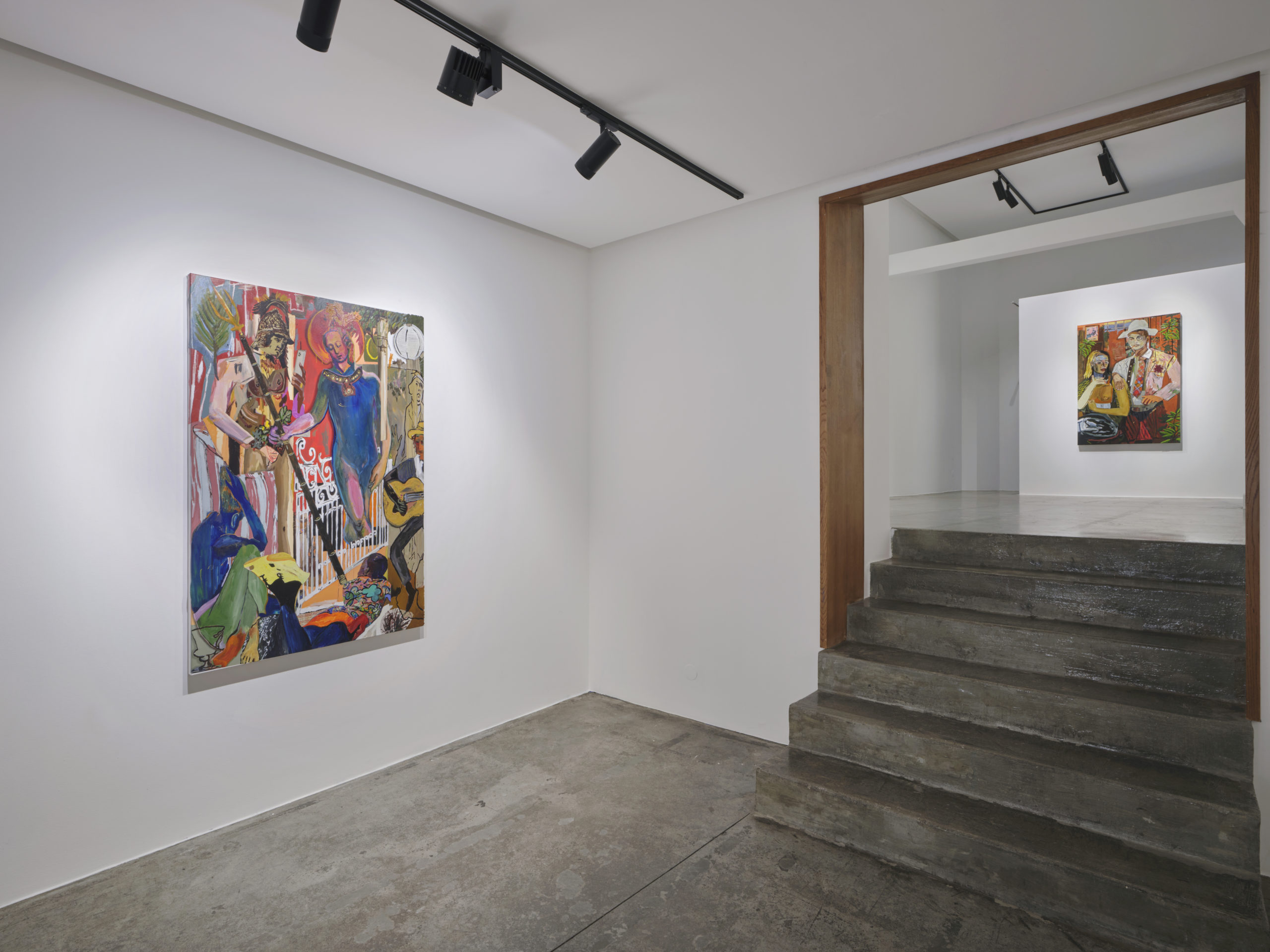
INSTALLATION VIEWS




PRESS RELEASE
Zidoun-Bossuyt Gallery presents This House Is Not A Home, a new solo exhibition by Haitian American artist Olivier Souffrant in Paris.
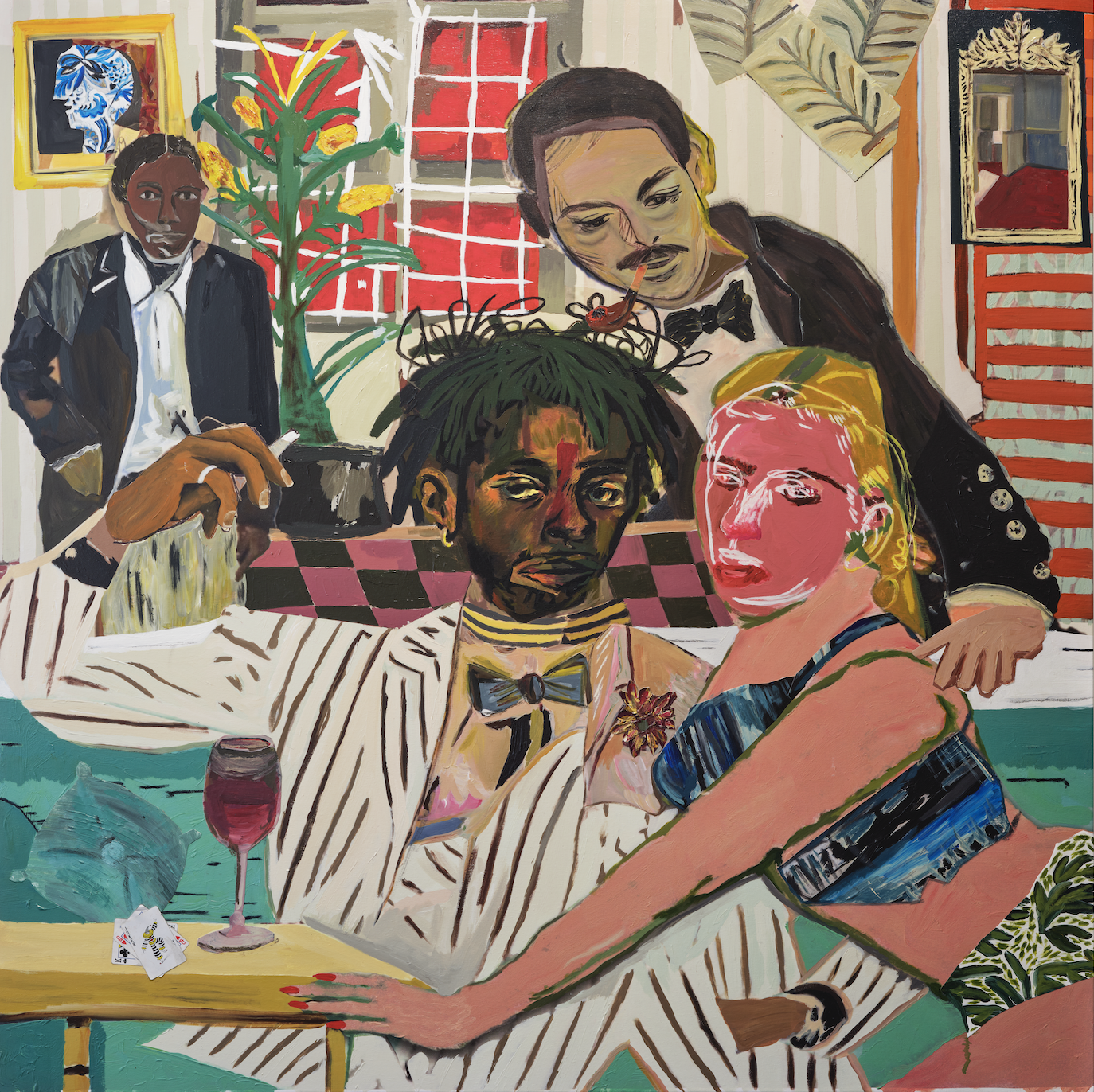
Rooted in assemblage, accumulation, and the recomposition of visual fragments, Olivier Souffrant’s practice explores the intersections of memory, history, and identity, bringing forth spaces where intimate experiences and collective narratives converge. In this new body of work, domestic and social spaces are less observed than reconstructed. Figures, architectures, and interiors emerge from an assemblage of historical, cultural, and personal fragments brought together within a single pictorial surface. This layered approach finds affinities with Romare Bearden’s additive method, Bob Thompson’s free engagement with art history, and the symbolic density associated with Jean-Michel Basquiat. References to Haiti’s cultural heritage, which constitutes one of the mnemonic and cultural frameworks through which the artist develops his visual language, surface throughout the exhibition, from the lakou to sugar cane and the histories it evokes. Far from functioning as illustrations, these references operate as sedimented layers of memory embedded within the very materiality of the works. At the same time, the question of an ever-unfinished sense of belonging runs throughout the series, echoing the historical and contemporary experiences of African Americans and, more broadly, racialized communities in the United States. The houses, studios, and transitional spaces Souffrant constructs thus appear as sites charged with memory and affect, yet never fully coalescing into a home. The result is a nuanced meditation on belonging, transmission, and displacement, and on the ways diasporic identities continue to be shaped and negotiated in the present.
The title This House Is Not A Home conceptualizes the house as both a real place and a metaphor, says Souffrant. It can be the body, the mind, a family history, a homeland, or the memories we carry with us. As someone who left Haiti at a young age, I’ve often found myself existing between places, cultures, and versions of myself. Home becomes something difficult to locate — remembered, imagined, longed for, and constantly reconstructed. In that sense, the paintings are not about a specific house, but about the feeling of searching for belonging while moving through unfamiliar landscapes, both physical and psychological. Many of the works take place in dreamlike interiors and exteriors where reality, memory, folklore, and personal history collapse into one another. Figures appear as if caught between waking and sleeping, between past and present. Rooms become stages for encounters with ancestors, spirits, desires, fears, and fragments of memory. The familiar becomes strange, and the strange begins to feel familiar. What remains is the ongoing search for a place, real or imagined, that can finally feel like home. — Olivier Souffrant
About the artist
Olivier Souffrant (b. 1994 in Port-au-Prince, HT, Lives and works in Chicago, IL, USA) is known for his exploration of memory, identity, and cultural narratives through a multidisciplinary practice that spans painting, drawing, collage, and printmaking. His work often reflects on personal and collective histories, weaving together fragments of experience to construct layered visual worlds. He studied at the University of Illinois in Chicago and has exhibited in institutions such as The Carr Center in Detroit, MI, and the Harvey Museum in Talladega, AL. Souffrant presented his first solo exhibition at Zidoun-Bossuyt Dubai in April 2024, followed by a second solo exhibition at Zidoun-Bossuyt Luxembourg in February 2025. His work is held in several private and institutional collections, including among others the Reiffers Art Initiatives Collection (France). His work was recently on view at Liljevalchs Konsthall in Stockholm as part of When We See Us: A Century of Black Figuration in Painting, conceived and organized by Zeitz MOCAA.
